Canadian Theatre Encyclopedia

Pelletier, Denise
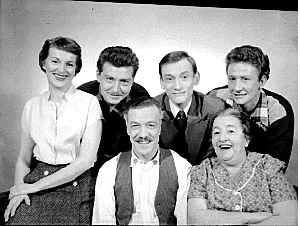
Renowned actor, comfortable working in both French and English, born in Saint-Jovite, Quebec in 1929 and died in Montreal, Quebec in 1976. She was the sister of actor Gilles Pelletier. Her father was a notary and she spent his childhood travelling between St-Jovite, Montreal and Kamouraska.
She career blossomed with the growth of Canada's theatre, and she perform with the Montreal Repertory Theatre, Compagnons de Saint-Laurent, the Comédie-Canadienne, the Théâtre du Nouveau Monde (from the start), the Stratford Festival, Neptune Theatre, St. Lawrence Centre, and on tours to Europe and the then Soviet Union.
She played the ingenues and grande dames in much of the classical and modern repertory including the ancients, the works of Molière and Shakespeare (both in French and English), Brecht, Albee and Strindberg.
She received the Centennial Medal, was a member of the Order of Canada, won the Molson Prize and several other prizes and distinctions.
Mme Pelletier became nationally recognized when she starred in the television series La Famille Plouffe/The Plouffe Family which played one night on Radio-Canada in French and the next night, with the same actors, on the CBC in English.
Mme Pelletier's performances, whether in the classical or modern works, were electric. She was beloved of audiences, critics and, particularly, her colleagues, like Jean Gascon, who were delighted to work with her again and again.
In 1976 she was touring a production of The Divine Sarah which had played, among other venues, the Centaur Theatre and was slated to be translated into French. However, Mme Pelletier died while undergoing open-heart surgery. She left behind a son, Stéphane Zarov, who is also in the theatre. The main house of the Nouvelle Compagnie Théâtrale / Théâtre Denise-Pelletier was named after her; now the company itself has taken her name.
The government of Quebec has also named an award in her honour. It is the highest distinction given to artists in the performing arts. In 1998, it was conferred on her brother, Gilles Pelletier.
Viewings: Côté cour... côté jardin, National Film Board, 1953, dir: Roger Blais - backstage during a TNM performance of L'Avare/The Miser
Profile by Gaetan Charlebois
Last updated 2020-01-16
Pelletier, Gilles
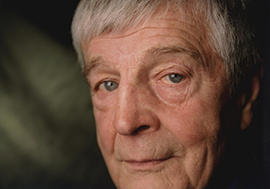
Actor/director born in St-Jovite, Quebec, in 1925; died September 5, 2018 at the age of 93. Brother of Denise Pelletier. Gilles Pelletier was a dominant figure in Quebec theatre.
His father was a notary and he spent his childhood travelling between St-Jovite, Montreal and Kamouraska. He began his career with Équipe, after having served in the French navy during WWII, and since then he worked constantly in radio, television, and cinema, as well as on stage.
He is one of the founders of Nouvelle Compagnie Théâtrale / Théâtre Denise-Pelletier which he helmed from 1964-82. While he led the Company he directed the works of Chekhov, Calderon, Marcel Dubé, Ionesco, Molière, Goldoni and many others.
As an actor, he was notable for magnificent presence and voice, which he applied to leads in Shakespeare's La nuit des rois/Twelfth Night and La mégère apprivoisée/Taming of the Shrew; Michel Tremblay's A toi, pour toujours, ta Marie-Lou; Pirandello's Six personnages en quête d'auteur/Six Characters in Search of an Author; Miller's Le Prix/The Price; and Dubé's
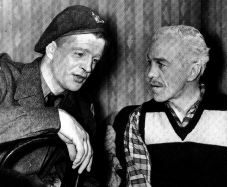
He has worked with many of the Canada's great directors including Pierre Dagenais, Georges Groulx, Paul Toupin and Paul Hébert.
Pelletier has said of his work, "I wish to pursue this absolute in acting: to get to a point, in theatre, where I make people live with me - make them become conscious of themselves at the same time that I become conscious of myself. I am also aiming at the liberation of my self through technique." About technique he has said, "When you learn a role, you have to find the respiratory rhythm of the character; it is the secret of what he lives... Learning a text is not difficult. Harder is forgetting it so that it is the situation which propels the text."
In 1998, he received the Prix Denise-Pelletier (named after his sister), the highest distinction granted by the Quebec government in the realm of the performing arts.
Viewings: Antigone, Radio-Canada, 1962, dir: Louis-George Carrier, a production of the Anouilh play staged for television and featuring Gilles Pelletier.
Profile by Gaetan Charlebois. Additional information provided by Alvina Ruprecht.
Last updated 2020-01-15
Pelletier, Maryse
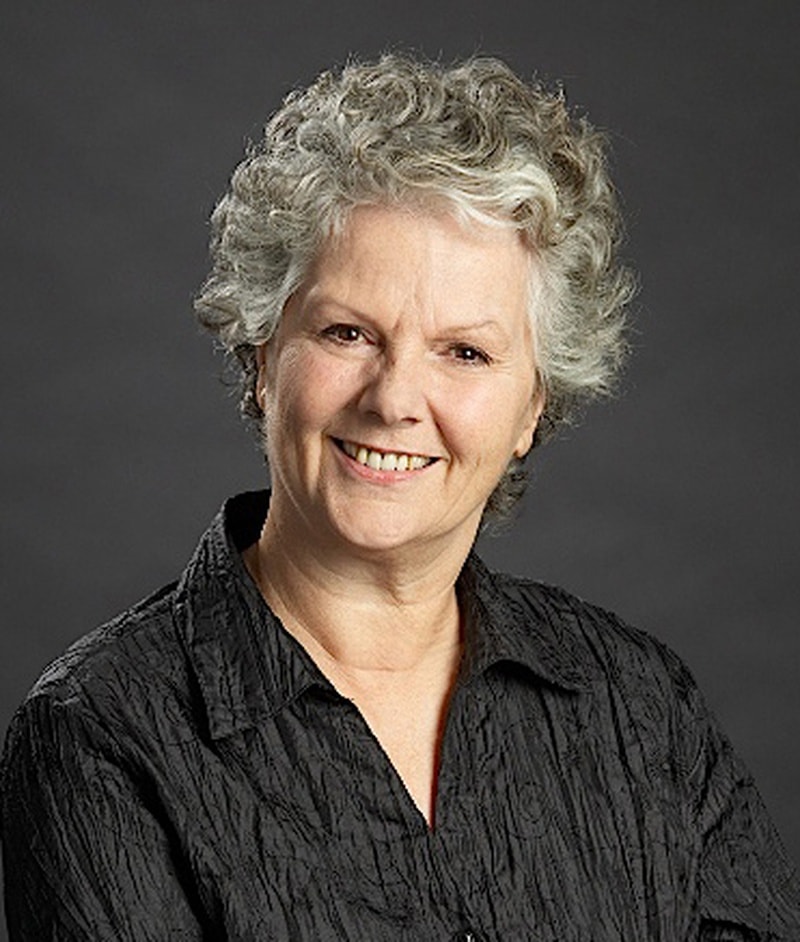
Quebec-based actor/playwright, born in 1946 in Cabano. Maryse Pelletier has been exploring many aspects of theatre since her graduation from the Conservatoire d'art dramatique de Québec. She also studied at the University of Moncton and Laval University in Quebec City and, later, in Japan.
She is author of several plays including La Rupture des eaux, Du poil au pattes comme les CWACS (premiered at Théâtre d’Aujourd’hui, 1982, translated by Louise Ringuet as And When the CWACS Go Marching On) and the Governor General’s Award-winning Duo pour voix obstinées (Théâtre d'Aujourd'hui, 1985, revived in 1995 by the Théâtre Populaire du Québec/TPQ, translated by Ringuet as Duo For Obstinate Voices). Her other plays include: À qui le p'tit coeur après neuf heures et demie (Théâtre d'Aujourd'hui, 1989); and Un samouraï amoureux (Théâtre la Licorne, 1992).
She has worked with several artistic organizations including the Théâtre d'Aujourd'hui, Playwrights' Workshop and the Association québécoise des auteurs dramatiques. In 1992 she became artistic director of the TPQ until the company closed in 1996.
She has written teleplays as well as one screenplay; seven novels for youth, and two for adults.
Profile by Gaetan Charlebois.
Last updated 2021-03-16
Pelletier, Pol
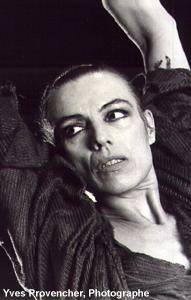
One of the country's great actors, and a seminal participant in the beginnings of experimental and feminist theatre in Quebec. Pol Pelletier has been involved in all aspects of theatre, as a director, theatre founder, playwright, theorist, and educator.
She was born November 6, 1947 in Ottawa Ontario, and graduated with a BA from the University of Ottawa in 1968. She participated in the student theatre company, La Comédie des Deux Rives, at the university. From 1970 and 1974 she acted in classical and contemporary plays in French and English in several theatres throughout Québec and Ontario. For Théâtre du Nouveau Monde in 1977 Pelletier acted in Les vaches de nuit, a short, explosive monologue by Jovette Marchessault, that became almost her signature piece in both languages for many years.
Pelletier was co-founder of two experimental theatre companies: the Théâtre Expérimental de Montréal (TEM) (now the Nouveau Théâtre Expérimental) in 1975, and the Théâtre Expérimental des Femmes (TEF) in 1979. In 1978, for TEM, she led a radically powerful collective creation entitled A ma mère, à ma mère, à ma voisine, and produced Trac, a special issue of the TEM journal on the objectives of the women in that company. At TEF, she performed in her own work, La Lumière blanche, and initiated an amazing range of activities at the TEF that brought women together night after night inventing new approaches to theatre and trying out their ideas. She was also one of the author/actors in the seminal feminist work, La Nef des sorcières.
Pol Pelletier resigned from the TEF in 1985 and undertook an intense exploration of theatre that took her around the world. She revealed what she had discovered through this exploration and from the entirety of her theatrical experience with three magnificent solo works, Joie (1992), Océan (1996) and Or (1997), performed by her own company, La Compagnie Pol Pelletier, founded in 1990. In 1998, Pelletier was awarded the prize for best female actor at the Masques Awards in her production of Océan.
She is also the founder of DOJO (1988) a centre where theatre practitioners and creators work on perfecting their art. She has performed the works in theatres and festivals in Canada, Europe and Africa.
She has said of her work, "My theatre is a theatre of exploration. If what I am doing does not transform me, if I find I am repeating what I know how to do simply to give pleasure, I won't do it. My goal, really, is not only to give people aesthetic emotions, but to chemically and energetically transform them."
In 2004 she created the solo work, Nicole, c'est moi a response to the massacre of fourteen young women at the Polytechnique in Montreal. It provides a history of feminism, reciting the names of women such as Simone de Beauvoir, and Jovette Marchessault, and the names of the slain women. Pelletier sees in this tragedy the end of feminism, and a return of patriarchy.
From 2005 to 2008, she lived in France, where she developed a cabaret with accordion entitled Une Contrée sauvage appelée Courage, which she brought back to Montreal in 2009. In all her work, she expresses the necessity for artists to shake up society like an earthquake, and to resist complacency and the status quo.
In 2012, from November 14 to December 10, she occupied a deconsecrated Catholic church in Montreal to present "revolutionary activities" mornings and evenings, without subsidies and completely independently, including her new work La Robe Blanche that exposes the abuses of the Catholic church, and its influence on Quebec identity; and 14 Femmes repatriées, to mark the anniversary of the Polytechnique massacre.
According to theatre scholar, Louise Forsyth, "Pol Pelletier is one of the very few women anywhere in this country or the world who formulated in her published works (there are several articles) and in her workshops and theatre practice an exciting new theoretical approach to acting, production and the body on stage."
Website: https://polpelletier.com
Profile by Gaetan Charlebois and Anne Nothof, with additional information from Louise Forsyth.
Last updated 2021-03-12
Since October 2002, Athabasca University has hosted the web site, with an editorial board of theatre scholars from across Canada.
To submit an entry, please consult the guidelines for submissions.
Email your submission to: Anne Nothof, Professor Emerita, Athabasca University.

The Encyclopedia collects and disseminates information on plays, playwrights and theatre practitioners. It does not respond to requests for information, auditions, bookings, or tickets.
The Canadian Theatre Encyclopedia web site was originally conceived and developed in 1996 by Gaetan Charlebois—theatre critic, playwright, and actor.
