Canadian Theatre Encyclopedia

Lepage, Monique
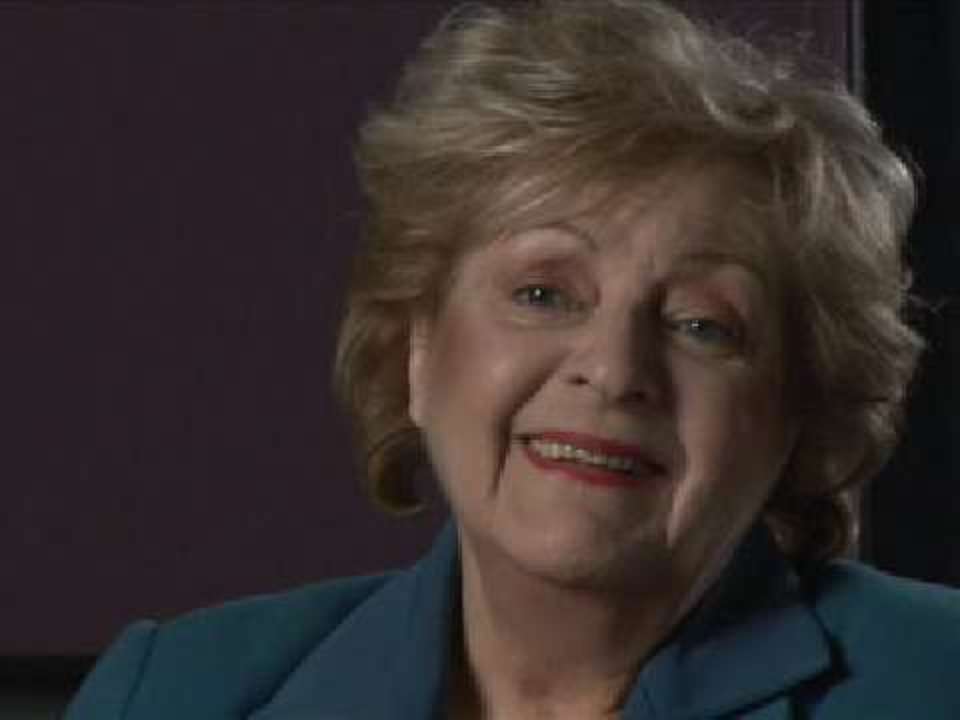
Actor born in Montreal, Quebec September 20, 1929.
She studied ballet, diction, song and piano. Monique Lepage began her acting career with Compagnons de Saint-Laurent (Célimène in Le Misanthrope, 1950). She subsequently played Viola in La Nuit des Rois (Le Théâtre-Club, 1956); and Martha in Qui a peur de Virginia Woolf (La Poudrière, 1966). More recently, she appeared in L'Arbre des Tropiques (Virgo Théâtre, 1990); Aux Abysses (Théâtre Expérimental des Femmes, 1987); and La Société de Métis (Théâtre d’Aujourd’hui, 1987). She has also performed on radio and television.
In 1953 she co-founded the Théâtre-Club with Jacques Létourneau, and helped administer the company while she played many lead roles. In 1966 she founded the Piggery Theatre and also acted and directed there.
She has also taught at the Conservatoire d'art dramatique.
With her former husband, Jacques Létourneau, she has a daughter, Anne Létourneau, also an actor with a career in Quebec and France.
Profile by Gaetan Charlebois and Anne Nothof.
Last updated 2021-03-16
Lepage, Robert

Internationally-renowned playwright/
actor/director born in Quebec City, Quebec, December 12, 1957.
He was raised in a bilingual household with two older adopted siblings who were anglophone. He studied at the Conservatoire d'art dramatique de Québec before joining the Théâtre Repère, soon becoming its lead actor and then director. His first work for the company, Circulations (1984) toured nation-wide.
His productions from the start were marked by his bilingualism, his explorations into multimedia, his homosexuality, and an ongoing study of the act of creation itself. His works, like Vinci (which examines the life of Leonardo), Aiguilles et Opium (which scrutinizes Cocteau and Miles Davis), and his breakthrough success, La Trilogie des Dragons (1985-86) (a vast epic in English, French and Chinese which toured Canada and Europe) reveal a vivid imagination, a love of startling imagery, and an experimentation with new technology. Sometimes theatrical form itself is called into question.
Polygraph (with Marie Brassard) premiered in 1988; it is a metaphysical detective story, based on the murder of one of LePage's friends, and structured to suggest the many layers of truth and meaning inherent in human experience. Tectonic Plates (1988) envisions the collision of cultures and continents in terms of a large pool of water over which two grand pianos are suspended.
The Seven Streams of the River Ota was the first project developed with Lepage's company, Ex Machina, over a three-year period between 1993-96. An ambitious saga in seven parts, it begins in the late 20th century, but the central image is the atomic blast at Hiroshima, the consequences of which are deconstructed through multiple stories and points of view. The first three-part version was produced in French at the Edinburgh International Festival in 1994. As subsequent version was performed at Carrefour International de Théâtre, Quebec in 1996, and won the award for best Quebec production at the Masques Awards. Since then, the seven-part work has toured in French and English in England, the US and Europe.
In Elsinore (1996), Lepage's postmodern solo transcription of Hamlet, he plays multiple roles from the internalized perspective of the unhappy Prince. He juxtaposes familiar speeches, not necessarily in the right order, and relies on computer-controlled multi-media stage machinery to provide context. Critic Ric Knowles explains that "what at first seems in Elsinore to be a radical de- and re-conceptualization of Hamlet's greatest hits may begin to seem like a meditation on the fragmentary, disjointed and decontextualized process of Hamlet writing 'us' into (our contemporary version of) existence" (Canadian Theatre Review 17 (Summer 2002): 87-88).
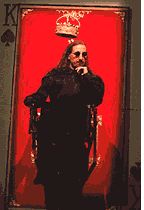
In 1997 Lepage devised a contemplative work on the works of Frank Lloyd Wright, entitled The Geometry of Miracles/La Géométrie des miracles, which toured internationally. In 1998 he created a 3D version of La Tempête/The Tempest and began work on Zulu Time which opened to mixed reviews in Geneva, and positive ones in Paris.
Lipsynch, developed over a period of several years, premiered at the Barbican Centre, London in September 2008. During its nine-hour duration, it follows nine characters across seventy years across the world, connecting the stories of disparate characters speaking in English, French, Spanish, and German. It explores the possibilities and limitations of the human voice and communication.
The Blue Dragon/Le Dragon Bleu (National Arts Centre 2009), written with Marie Michaud, and directed by Lepage, is a spinoff from The Dragon’s Trilogy, with the same central figure, an artist who re-surfaces in Shanghai twenty years later. It explores the dynamic paradox of modern China, rapidly reinventing itself, but still burdened by censorship and repression. Lepage and Michaud also acted in the play, with Tai Wei Foo as the protagonist's lover. The Blue Dragon was a cultural contribution to the winter Olympics in Vancouver in 2010; it opened Fei and Milton Wong Experimental Theatre, Simon Fraser University.
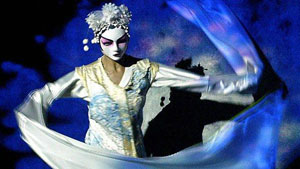
Photo by Erick Labb
Lepage returned to this theatre in 2012 with a production of Far Side of the Moon. His autobiographical work, 887 premiered at the Fei & Milton Wong Experimental Theatre in 2016. The number references his childhood address on Murray Street in Quebec City, named after the second-in-command under General Wolfe. It vividly evokes his self-awareness of Quebeckers as a conquered people. It won a Dora Award for Outstanding Touring Production in 2017.
As his reputation grew, so did his canvas and the works he has undertaken. His innovative interpretations of Shakespeare's plays garnered him an international reputation. In 1992, he directed A Midsummer Night's Dream for the National Theatre in London, the first North American to direct for this company. That same year, his series of productions of Shakespeare's Macbeth, The Tempest, and Coriolanus (all translated by Michel Garneau) began a tour throughout Europe, Japan and in the Festival de Théâtre des Amériques (now Festival TransAmériques), stirring up critical controversy, but transfixing audiences.
In the summer of 2011, Lepage returned to Shakespeare with an outdoor production of The Tempest in French at the Wendake amphitheatre near the St. Charles River, Quebec, in collaboration with the Huron-Wendat nation, including Indigenous and non-Indigenous actors. "The outcome was an eclectic mélange of Shakespeare text, westernized Indigenous dance, Québécois chanson, nature-inspired mythology, and physicalized acting" (Piet DeFraeye. Review of Robert Lepage’s Scenographic Dramaturgy: The Aesthetic Signature at Work by Melissa Poll, in <Theatre Research in Canada 41.4 (2020): 161)./p>
In the summer of 2018, Lepage directed a contemporary interpretation of Coriolanus at the Stratford Festival. Mounted in the Arden Theatre, with a cinematic design created with his company Ex Machina, this was Lepage's first production for Stratford, and his first production of the play in English. It underscored the ways in which public opinion is represented by social media and social media; the fickleness of the populace; and destructive consequences of personal ambition. The critical response was mixed: In his review, Christopher Hoile states that form has superseded and skewed content: "Robert Lepage’s production of Shakespeare’s Coriolanus is dazzlingly cinematic if self-indulgent, but his change to the play’s ending and other excisions of key characters demonstrate that he has virtually no understanding of the central issues of the play" (Stage Door 7 July 18). Robert Cushman was more favourably impressed: "The style and the discipline are maintained throughout. The staging might best be described as compartmentalised. Each scene unfolds in a small demarcated space, as if within a TV or computer screen...Lepage's production is physically set in rooms, but psychologically it escapes them. The play’s scale remains. Lepage’s sets (he’s his own designer) hit the stage from all directions; from above, from below and – most often – from the side: sometimes from opposite sides simultaneously, so we get to visit two locations at once. This comes in very handy as the politics thicken, as the politicians hunker down in their own offices or shuttle between them" (stratfordfestivalreviews.com, 1 July 18).
In January, 2019, Lepage's French production of Coriolon (trans. Michel Garneau) opened at Théâtre du Nouveau Monde in Montreal. For the Stratford 2025 season, he directed an Ex Machina interpretation of Macbeth as a biker gang war. In Lepage's opinion, "whatever the political system or the moment in history, there is always a Macbeth somewhere ... an ambitious person who transforms a society into a dictatorship" (quoted from Stratford 2025 program).
In June 2018, he launched SLĀV at Théâtre du Nouveau Monde, co-created with Montreal singer, Betty Bonifassi for the Montreal Jazz Festival. Based on songs created by African-American slaves and labourers, and with only two Black performers in the six-member chorus, the production was met with protests, and was subsequently withdrawn by the Festival.
Lepage's work, Kanata (co-authored with Michel Nadeau) was launched in July 2018, and scheduled for production by Théâtre du Soleil in Paris (produced by Ariane Mnouchkine). Following First Nations' protests that there were no Indigenous actors in the cast, accusations of cultural appropriation, and the withdrawal of funding, the production was cancelled. However, Mnouchkine decided to go ahead with a production in December, with Lepage as director. Kanata portrays Canadian Indigenous history, including the residential school system and missing and murdered Indigenous women.
From 1989 to 1993, Lepage was director of the National Arts Centre French-language theatre, but he has also directed at the Canadian Opera Company, the National Theatre (London, England), the National Theatre (Munich), and the Royal Dramatic Theatre (Stockholm). He has also stage directed a tour for rock star Peter Gabriel.
Lepage also directs and designs operas, including Bluebeard's Castle and Erwartung for the Canadian Opera Company, which toured to the Hong Kong Arts Festival, Geneva Opera, Melbourne, Brooklyn Academy of Music, and the Edinburgh International Festival. In 2010, with his company, Ex Machina, he designed and directed a spectacular production of Wagner's Das Rheingold for New York's Metropolitan Opera, using interactive video and a twisting vertical stage of illuminated planks.
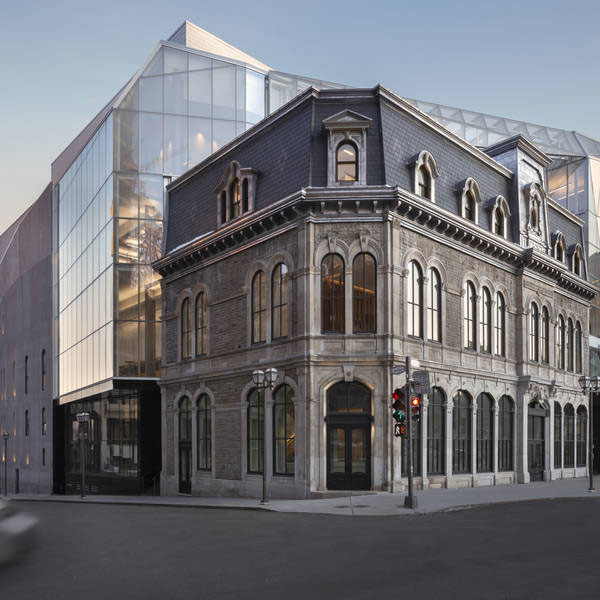
Lepage's design for the Cirque du Soleil production, Ka in Las Vegas, required a new theatre with a floating stage.
His films include John Mighton's Possible Worlds (1999) featuring Tom McCamus, Gabriel Gascon and Rick Miller.
His company, Ex Machina, operated in renovated a fire station in Quebec City as a multidisciplinary arts centre that does research into theatre, opera, puppetry, dance and music. In 2017, Lepage initiated the construction of another creative space in Quebec City, called "Le Diamant", a $54-million complex to house his Ex Machina production company and for Canadian and international theatre-related arts (Globe and Mail 27 Jan 2018). It opened in September 2019 with an updated version of The Seven Streams of the River Ota.
Lepage has said of the extended, free-wheeling process he uses to create his works, "I don't even know what I'm writing until the audience tells me." During a discussion session at London's National Theatre (January, 1997), when asked what he thought theatre was, he answered, "I always come back to the same old notion that it's a gathering, a meeting point. A gathering in the sense that a group of artists get together to tell a story, and also the collective audience. The audience in a theatre room is very different from the audience to a film, because they actually change everything on the stage by their energy. You can't do that to a TV screen."
He is a Companion of the Order of Canada since 2011, and a recipient of a Governor General’s Award for Lifetime Achievement. In November 2001, he received the London Evening Standard Award for his production of La Face cachée de la lune. In 2002, he was awarded the Herbert Whittaker Award for Distinguished Contribution to Canadian Theatre by the Canadian Theatre Critics Association. In 2013 he was awarded the $50,000 Glenn Gould Prize for a life's work that "enriches the social fabric of the culture."
Sources: Éve Dumas. "Robert Lepage est primé à Londres," Le Devoir, Montreal, 28 Nov 2001; Elizabeth Renzetti. "Lepage's nine-hour voice message," The Globe and Mail. Toronto, 6 Sept 2008.
Profile by Gaetan Charlebois and Anne Nothof.
Last updated 2025-10-25
Lepage, Roland
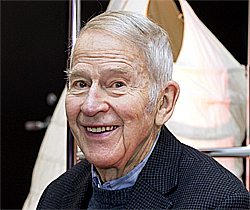
Quebec-based playwright, actor and director, born in Quebec City, October 31, 1928.
After graduating from Laval University in Quebec City, Roland Lepage began a theatre there with Pierre Boucher and Paul Hébert. He then went to Bordeaux, France to study and to work in theatre, subsequently pursuing a career as actor on stage, radio and television.
Aside from his stage plays, he has also written for television and has translated and adapted classics and modern works. He has also taught at the National Theatre School of Canada and served as Artistic Director at the Théâtre du Trident.
He won the Chalmers Award for Le temps d'une vie (commissioned by the National Theatre School, 1974, translated by Sheila Fishman as In a Lifetime, Tarragon Theatre, 1978), the first time the award was given to a francophone author.
Other plays include: La Folle du Quartier-latin, an adaptation of Jean Giraudoux's La Folle de Chaillot (Grand Théâtre de Québec, 1976), and La Complainte des hivers rouges (Théâtre du Trident, 1978). Translations include: Anton Chekhov's The Cherry Orchard as La Cerisaie (Théâtre du Rideau Vert, 1987), David Rudkin's Ashes as Cendres (Théâtre du Trident, 1988).
In 2008, to celebrate his eightieth birthday, Théâtre de la Bordée presented three evenings dedicated to readings of his work.
Profile by Gaetan Charlebois.
Last updated 2021-02-01
LePage, Sue
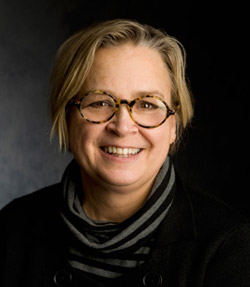
Ontario-based set and costume designer for forty years. Sue LePage studied at the University of Guelph.
She has designed set and/or costumes for over 100 productions at many of Canada's major theatres including Tarragon Theatre, Grand Theatre, London, Nightwood Theatre (Goodnight Desdemona (Good Morning Juliet) 1990), Citadel Theatre, Banff Centre for the Arts, Canadian Stage, National Arts Centre, Soulpepper Theatre Company, and Young People's Theatre.
For the Stratford Festival she designed sets for A Midsummer Night's Dream, Richard III, Hamlet, Rosencrantz and Guildenstern are Dead, Irma La Douce and Mother Courage .
For the Shaw Festival (sixteen seasons), she designed for Harvey, Born Yesterday, You Can't Take it With You (1999), Uncle Vanya (1999), Age of Arousal (2010), Cat on a Hot Tin Roof (2011), The Philanderer (2014), and O'Flaherty V.C. (2018) among many others.
In 2000 she designed The Memory of Water at the Elgin and Winter Garden Theatre Centre, and the Tarragon's production of Liquor, Guns, Karate. She designed the world premiere of Zadie's Shoes for Factory Theatre in February, 2001. In 2011, she designed a complex and detailed home interior for the proscenium stage at the Citadel Theatre which facilitated the fraught choreography of the disintegrating family in August: Osage County. For this set she was awarded a Sterling Award in 2011.
She has designed three new operas by John Estacio and John Murrell: Filumena (Banff Centre/Calgary Opera), Frobisher, and Lillian Alling (Vancouver Opera 2010). For the Tapestry Opera/Edmonton Opera, she conceived the set and costumes for the new work, Shelter, using light projections to evoke the creation of the atomic bomb in terms of a nuclear family.
Her designs are detailed and imaginative, evoking specific times and places, to provide a rich context for the lives of the characters. She "love[s] words, ideas and making things. Every show and every day designing sets and costumes, [she works] with other people who love them too: painters, tailors and carpenters who love words and ideas; actors and directors who love making things" (O'Flaherty V.C. program, 2018).
She has twice won the Dora Mavor Moore Award. She lives in Toronto.
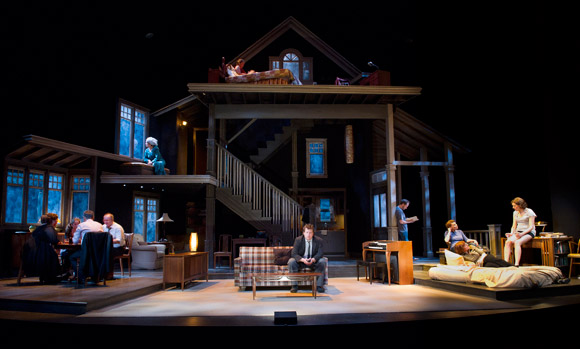
Photo by David Cooper
Profile by Gaetan Charlebois. Additional information provided by Christopher Hoile, Pierre Karch, and Anne Nothof.
Last updated 2018-08-11
Since October 2002, Athabasca University has hosted the web site, with an editorial board of theatre scholars from across Canada.
To submit an entry, please consult the guidelines for submissions.
Email your submission to: Anne Nothof, Professor Emerita, Athabasca University.

The Encyclopedia collects and disseminates information on plays, playwrights and theatre practitioners. It does not respond to requests for information, auditions, bookings, or tickets.
The Canadian Theatre Encyclopedia web site was originally conceived and developed in 1996 by Gaetan Charlebois—theatre critic, playwright, and actor.
