Canadian Theatre Encyclopedia

Tremblay, Carmen
Veteran Quebec-based actor who has worked in French and English across Canada and in the United States.
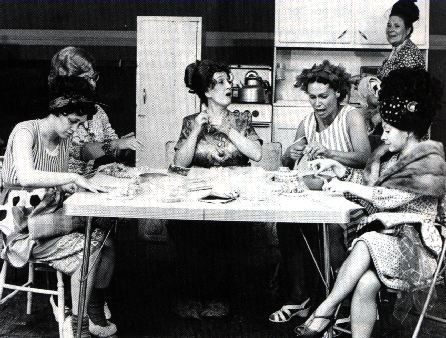
Her stage credits are extensive and include performances in Orion le tueur (1958), La Bande à Bonnot, Aujourd'hui, peut-être..., and Colette et Pérusse for the Théâtre de Quat'Sous; and several productions of Michel Tremblay's Les Belles-soeurs, including the one that played in Paris in 1973.
She has performed frequently in other Tremblay works including Bonjour, là, bonjour (1974),Surprise! Surprise! (1975), Sainte-Carmen de la Main (1976); and in the films Françoise Durocher, Waitress and Le soleil se lève en retard.
In 1979 she performed in the American premiere of Gaëtan Charlebois' Aléola and also performed the work at Alberta Theatre Projects.
Her acting range goes from the hard-edged (Tremblay) to the exquisitely gentle (Charlebois).
Carmen Tremblay lives in Montreal.
Profile by Gaetan Charlebois
Last updated 2022-02-08
Tremblay, Guylaine

Prize-winning Quebec-based actor, born October 9, 1960, who has played a variety of roles in theatre, televsion, and film since 1980. Guylaine Tremblay graduated from the Conservatoire d'art dramatique de Québec in 1984. She subsequently became a favourite at Théâtre du Trident.
She came to Montreal in 1990 to work with Robert Gravel and was a regular artistic accomplice of his until his death.
She has worked with many of the Quebec's top directors including Robert Lepage (À propos de la mademoiselle qui pleurait), Guillermo de Andrea (La Cerisaie/The Cherry Orchard), Marie Laberge (in her Aurélie, ma soeur, 1988), François Faucher (Le Dialogue des Carmélites), Claude Poissant (Lion dans les rues/Lion in the Streets), René Richard Cyr (En pièces détachées), and Martine Beaulne (Albertine, en cinq temps). In November 1999, she appeared in the premiere of Serge Boucher's 24 poses at Théâtre d'Aujourd'hui, directed by Cyr. From 2010 to 2012, she played the role of Rose Ouimet in Michel Tremblay's Les Belles-Soeurs at Théâtre d’Aujourd’hui (dir. Cyr), which toured Quebec and in Paris.
Guylaine Tremblay's extensive and very successful television and film career included a regular role in Claude Meunier's La p'tite vie, the most popular series in the history of French-language Canadian television.
Her performances are marked by a magnificent voice and a vivacious approach to each role.
Website: https:// www.guylainetremblay.ca
Profile by Gaetan Charlebois
Last updated 2022-02-09
Tremblay, Joey
Director, playwright, producer, and actor, based in Regina Saskatchewan. Joey Tremblay grew up in South East Saskatchewan in the francophone hamlet of Ste. Marthe. As a child, he was inspired by his grandmother's theatricals in the family barn to create fantastical imaginary creatures. He received a B.F.A. in Drama from the University of Regina (1987) and a Diploma from the Vancouver Playhouse Acting School (1989). After working several years as a freelance actor, Tremblay co-founded Noises in the Attic, a theatre company mandated to produce and create new Canadian plays on the fringe movement circuit across Canada.
From 1996 to 2001, Tremblay was the Artistic Co-Director with Jonathan Christenson of Catalyst Theatre in Edmonton. During this period, he wrote, devised, co-directed and produced fifteen performance events and full-length scripts that toured across Canada, Great Britain and Australia.
Elephant Wake, a monologue co-written by Christenson and Tremblay, (Edmonton Fringe 1995) was performed in a revised version at the Catalyst in 1996 (dir. Christenson, designer Bretta Gerecke), with Tremblay as the protagonist Jean Claude. Elephant Wake is a lament for a dying French culture on the prairies, subsumed by an Anglophone hegemony. Jean Claude is the last member of a once extensive Catholic family to remain in the large ancestral home. But he insists on survival, creating a zoo full of creatures from papier-mâché-–an imaginative world that he can safely inhabit. Elephant Wake travelled to the Edinburgh Fringe in 1997 and to the Brighton Festival the following year. It was highly acclaimed by critics and awarded an Edinburgh Fringe First Award for Outstanding New Work. It was remounted by Catalyst in 2014, with Tremblay playing Jean-Claude as a 77-year-old who recalls his fraught experiences in an English school, his escapades with his Metis friend, and the demise of his family, insisting on the necessity of remaining strong, and working hard. Tremblay won a 2015 Sterling Award for Best Actor in a Leading Role for his performance. Elephant Wake is published by NeWest Press (Edmonton, 1999) in a collection entitled Ethnicities: Plays from the New West.
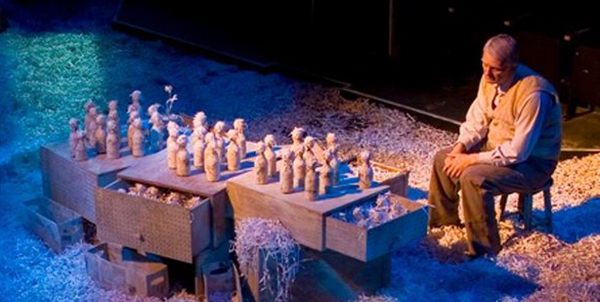
Tremblay, Christenson, and designer Gerecke continued to work collaboratively with actors to produce highly imaginative works, typically set in Alberta. In the 1996-97 season, the Abundance Trilogy explored the dark side of life in Alberta through the lives of the misfits, grotesques, and marginalized, and invited the audience to participate as voyeurs of the gothic tales which unfolded. Other collaborations included My Perfect Heaven, Electra, and Songs for Sinners (1997/98 season), an unmusical musical morality play which examined the implications and contemporary manifestations of the deadly sin, Sloth.
Christenson, Tremblay, and Gerecke developed The House of Pootsie Plunket in 1999, and took it to the Edinburgh Fringe where it won the Scotsman’s Fringe First Award. The play is a satiric recasting of "Bonanza"-style television melodrama in an Alberta environment, with Greek myth underpinnings.
In 2000, the collaborative team at Catalyst initiated The Blue Orphan, a collage of poetic text, imagery, and music, for the Edmonton Fringe, and reworked it for a premiere at the theatre in 2002. It subsequently travelled to the Edinburgh Fringe in 2002 and the Adelaide Fringe in 2004.
Following his tenure at Catalyst, Tremblay was Artist-in Residence at the Globe Theatre for eight years. From 2004 to 2008, he was commissioned by the Globe Theatre to write and direct, O George, The Alice Nocturne, and a new version of Elephant Wake.
For four years he was a member of the English Theatre Ensemble at the National Arts Centre from 2010, where he appeared in Mary Zimmerman's Metamorphoses (directed by Jillian Keiley, among other roles.
Since 2015, Tremblay is Artistic Associate of Curtain Razors, a theatre company in Regina that develops site-specific productions, and which produced two of his works: Carmen Angel (2016) and Bad Blood (2017, in collaboration with the University of Regina theatre department). Bad Blood chronicles his own traumatic experience with the health care system in Saskatchewan. Having contracted an ailment in Mexico, he was the victim of a series of misdiagnoses that nearly cost him his life.
All of his work in theatre has been predominantly in the sector of new play development through a wide range of processes and styles: from non-linear, interactive, environmental installations to more linear, narrative scripts, where his involvement has been that of a more traditional playwright. Many projects began as translations of classic work and then through re-writes and rehearsal, they evolved into hybrid interpretations.
Tremblay has received over thirty awards and nominations for outstanding direction, production and acting, including two Scotsman Fringe First awards for outstanding writing.
Source: Curtain Razors website
Profile by Anne Nothof, Athabasca University
Last updated 2021-09-27
Tremblay, Larry
Quebec-based playwright/actor/director/novelist/essayist, born in Chicoutimi in 1954. He has a Masters degree in drama from l'Université de Québec à Montréal (1983), and is a founder of the acting study troupe, Laboratoire gestuel.
Among his many works, performed in Quebec, across Canada, and internationally, are Le Déclic du destin (Laboratoire gestuel 1988); Leçon d'anatomie (Théâtre d’Aujourd’hui 1992); The Dragonfly of Chicoutimi (Théâtre d’Aujourd’hui, 1993); Le Génie de la rue Drolet (Théâtre de la Manufacture 1997); Ogre (Théâtre d’Aujourd’hui, 1995). His work Les mains bleues was presented at Théâtre d’Aujourd’hui and in Paris (March, 1999), and his short story L'Oeil de Rosinna was adapted to the stage (by Lou Babin) and played at Aujourd'hui in May, 2000. Dragonfly was also performed at Factory Theatre, January 2002.
Larry Tremblay typically writes and produces on average a play every year: Panda Panda (Théâtre en l'Air 2004); La hache (Théâtre de Quat'Sous 2006); Abraham Lincoln va au théâtre (Théâtre Petit à Petit, 2005); A Chair in Love, libretto for music by Welsh composer John Metcalf (2005); L'histoire d'un coeur (Théâtre Incliné 2006); Le probleme avec moi (Omnibus 2007).
Four of his plays have been translated into English by Sheila Fischman and published by Talonbooks under the title Talking Bodies (2001): "A Tick of Fate", "Anatomy Lesson", "The Dragonfly of Chicoutimi" and "Ogre".
Abraham Lincoln Goes to the Theatre (trans. Chantal Bilodeau) premiered in English at the playRites Festival in Calgary in February 2010. It replays the assassination of Lincoln as a tragi-comic metatheatrical exploration of the conflation of illusion and reality, and explores the American obsession with fame in terms of the shifting dynamics between two actors playing Laurel and Hardy, and a director playing Lincoln as a wax dummy. In a program note, Tremblay explained that he structured his play around a series of oppositions: "good/bad, sado/maso, North/South, truth/lies, small/big, Laurel/Hardy, the imitator/the imitated... [He] discovers the schizophrenia of America: the gulf between the official line (family and religious values) and radical capitalism. [He] discovers, in fact, that America is, above all, a way of seeing the world, and of taking it for yourself."
Larry Tremblay has also published a novel, Le Mangeur de bicyclette (2002), which was a finalist for a Governor General’s Award; a collection of short stories entitled Piercing (2006); and two books of poetry.
He was a professor at l'Ecole supérieure de théâtre de l'Université de Québec à Montréal. In 2008 he was a finalist for the Siminovitch Prize in Theatre.
Tremblay said of his works, "I am fascinated by the body. I believe this theme crosses all my work." The physicality of his plays reflects his interest in kathakali theatre, a traditional theatre form from the southern state of Kerala in India, which performs epic stories with masks, elaborate costumes, and stylized movement, accompanied by drum and flute. His plays also reflected his preoccupation with language and silence, and psychic and social trauma.
Source: http://www.cead.qc.ca/repw3/tremblaylarry.htm
Profile by Anne Nothof, Athabasca University
Last updated 2024-06-11
Tremblay, Michel
Introduction
Playwright/translator born in a working class family in Quebec in 1942, Michel Tremblay is probably the most-produced playwright in Canada and arguably the most important playwright in the history of the country.
His first widely produced play, Les Belles-soeurs, opened the floodgates of theatre, both francophone and anglophone, in a number of ways. First, it introduced a theatre that was from here and that could not be mistaken for theatre from anywhere else. The language Tremblay used in the work - joual - was still a rare thing in Quebec theatre but the work used it in a frank, often brutal, way. Moreover, the language was not simply used for shock value - the piece also set out to prove that the language of the streets was a beautiful thing; there is a hilarious and lovely oratorio in the play that speaks about the game of Bingo. Belles-soeurs also signalled a challenge to the censorship traditionally exercise by the clergy. The swearing in the play (like much of Quebec-French swearing) was based on religious terms. With its all-women cast of characters, it championed Quebec working-class women, who, until well after the Quiet Revolution, had been repressed by the strictures of the Catholic Church and of the patriarchy. This work and subsequent plays also signalled the emergence of the Nationalist movement in Quebec. Indeed, questions of identity (sexual, cultural etc.) are constant themes in Tremblay's entire oeuvre.
Tremblay's early works, particularly Hosanna and La Duchesse de Langeais, though seen as separatist metaphors, are also early instances of openly Gay characters in Canadian theatre. Indeed many of his works, then and later, featured Gay characters with no apology. It was soon after Tremblay became a household name that he, too, announced his sexual orientation and he became a hero of the Gay movement.
What is also important is that the works of Michel Tremblay, both fiction and dramatic, have proven their exportability not only to the rest of Canada but world-wide. His plays have been adapted and translated into dozens of languages and have seen huge success in Europe, the Americas, and the Middle-East.
Tremblay's mother was born in Providence, Rhode Island to a Cree mother (cotton factory worker) and French father (a sailor). He was raised in a series of apartments in the section of Montreal known as Le Plateau, a working-class district that since has been gentrified. In many cases, the apartments were shared with a number of relatives outside of the immediate family. Much of his childhood, particularly his touching relationship with his mother, is chronicled in the autobiographical sketches contained in several books including Douze coups de théâtre and Les vues animées. He was an ardent reader early on and secretly began to write, as a teenager.
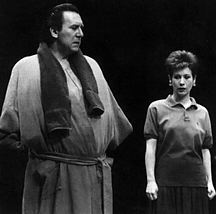
In 1959 he entered the Institut des arts graphiques, following in his father footsteps as a printer and linotype operator. He worked as a linotypist between 1963 and 1966 while composing his first play, Le Train, which won first prize in 1964 in the competition for young authors sponsored by Radio-Canada. The play was performed twice. In 1966 he published his first novel, Contes pour buveurs attardés and also produced a work in one act called Cinq which was performed in 1966.Cinq would be reworked to become En pièces détachées. Even in these early works he began to incorporate aspects of his own life and the lives of his family and friends. There is still speculation about how much of his Le Plateau plays and characters like Édouard, Thérèse, Albertine and Marcel are based on the real relatives with whom he shared his roof.
On a Canada Council grant, Tremblay went to work in Mexico and there wrote a fantasy novel, La cité dans l'oeuf and the first of his Gay works La Duchesse de Langeais, a monologue about a transvestite (Edouard, who appears in many other works of drama and fiction) who uses quick wit and panache to survive a humdrum life.
Tremblay had, by this time, struck up a friendship with the young André Brassard who had run into him at theatres around town and with whom he would occasionally walk home after a play, discussing theatre all the way.
In 1968, Les Belles-Soeurs received a public reading at the Centre des Auteurs Dramatiques and was picked up by Yvette Brind'Amour, artistic director for the Théâtre du Rideau Vert. Brassard directed the work and has directed all of the Tremblay premieres since. Tremblay's play changed the style and content of Canadian theatre with its use of colloquial speech (joual) and cursing; the people of the play (working-class with no future); and the fact that the play dared to frankly depict the lives of women, including sex and even abortion.
From then on, new professional productions of Tremblay works became practically an annual affair. His plays were being performed in revival, or on tour, or in English translation. Since 1968, several professional companies in Canada are performing his works every year.
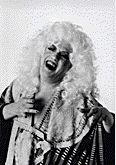
His plays have been performed in many of the country's top venues including the Stratford Festival; Centaur Theatre (the Scottish adaptation of Belles-soeurs-Guid Sisters, translated by Martin Bowman and Bill Findlay - played Centaur in 1994); Tarragon Theatre; Citadel Theatre; Neptune Theatre; Le Théâtre du P'tit Bonheur; Théâtre du Rideau Vert; Théâtre de Quat'Sous; Théâtre du Nouveau Monde, Compagnie Jean-Duceppe; Espace Go (perhaps the most exciting revival of a Tremblay work occurred here in 1995 when Martine Beaulne directed an all-star cast in Albertine, en cinq temps); the National Arts Centre; Saidye Bronfman Centre (and Les Belles-soeurs in Yiddish with the Yiddish Theatre at the Saidye Bronfman); Théâtre d'Aujourd'hui; Théâtre Populaire du Québec; and hundreds of alternative, amateur and school companies.
His plays have been produced in over twenty-two languages (including Yiddish, Haitian Creole, Dutch, Lithuanian, Hindi, and Japanese).
Tremblay has received many of this country's and others' top honours, and many honorary doctorates. In 1999, he received a Governor General’s Award and found himself at the centre of a controversy when well-known Quebec nationalists expected him to refuse the award. He did not, though he did announce publicly, for the first time, that he had previously refused the Order of Canada in 1990. In 2000, Encore une fois, si vous le permettez(For The Pleasure of Seeing Her Again) won a Chalmers Award and a Dora Mavor Moore Award.
It is a worthwhile exercise to read Tremblay's fiction as well, as in many cases it illuminates the lives of the principal characters of his plays. For instance, the title character of the novel Des nouvelles d'Édouard is the same Édouard we see in La maison suspendue and in La Duchesse de Langeais. Albertine, Thérèse, Marcel and several other characters of the plays make appearances all through the six novels that make up Les Chroniques du Plateau Mont-Royal. Also, much of Tremblay's fiction speaks of Tremblay's life. For instance his novel, Le coeur décovert, speaks of the birth of a love affair between two men, one of whom has a child; the story is similar, in many respects, to a relationship Tremblay had.
Michel Tremblay divides his time between homes in Montreal and Key West.
He said to the Globe and Mail (April 27, 2000), after a cool critical reception to Encore une fois..., "I'm not humble. I'm everything but humble. But I draw a line at being good and being a genius. You can be wonderful and write beautiful music but you're not Stravinsky. That's all. And when you accept you're not Stravinsky, you can go on in life, and write, and enjoy your writing."
Plays with profiles in the Canadian Theatre Encyclopedia on the WWW: (English titles are the same unless stated otherwise)
Les Belles-soeurs (also translated into Scots dialect as Guid Sisters); A toi, pour toujours, ta Marie-Lou (Yours Forever, Marie-Lou); Hosanna; Bonjour, là, bonjour; Albertine, en cinq temps (Albertine, in Five Times); Encore une fois, si vous le permettez (For The Pleasure of Seeing Her Again).
Among his other plays are: (English titles - if translated - are the same unless stated otherwise)
Le train, Les Socles, Les Paons; En pièces détachées (Like Death Warmed Over or Montreal Smoked Meat); Trois petits tours ("Berthe," "Johnny Mangano and his Astonishing Dogs," "Gloria Star"); Demain matin, Montréal m'attend (musical with music by François Dompierre); La Duchesse de Langeais; Sainte Carmen de la Main (Sainte Carmen of the Main); Surprise! Surprise! Les héros de mon enfance; Damnée Manon, Sacrée Sandra; L'Impromptu d'Outremont (The Impromptu of Outremont); Les anciennes odeurs (Remember Me); Le vrai monde? (The Real World?); Nelligan (libretto for the romantic opera with music by André Gagnon); La maison suspendue; Marcel poursuivi pas les chiens; En circuit fermé; Messe solennelle pour une pleine lune d'été (The Impromptu of Nuns Island; Bonbons Assortis (Assorted Candies) -- Centaur Theatre 2006).
In 2020, when the Covid-19 pandemic closed theatres in Quebec and across Canada, he wrote a 30-minute radio play about a couple (played by Denise Filiatrault and Gilbert Sicotte) who had been together for 70 years, and separated at the beginning of the pandemic when one has tested positive for Covid-19. But their love resists the constraints of the virus.
In November 2022, he premiered a new play at the National Arts Centre French theatre: Cher Tchekhov, in which the Russian playwright (played by Serge Denoncourt, who also directs) revisits a script while his actress siblings, their author brother (played by Tremblay) and a critic engage in a verbal sparring match.
Among Tremblay's adaptations and translations are:
Lysistrata (Aristophanes); L'effet des rayons gamma sur les vieux garçons (Paul Zindel, The Effect of Gamma Rays on Man-in-the-Moon Marigolds); Et Mademoiselle Roberge boit un peu(Paul Zindel, And Miss Reardon Drinks a Little); Mademoiselle Marguerite (Roberto Athayde, Miss Margarita's Way); Oncle Vania (Anton Chekhov, Uncle Vanya)

Le gars de Québec (Gogol, The Inspector General); Six heures au plus tard (Marc Perrier); Première de classe (Casey Kurtti); Mistero Buffo (Dario Fo); La déscente d'Orphée (Tennessee Williams, Orpheus Descending); Les leçons de Maria Callas (Terrence McNally, Masterclass); Grace et Gloria (Tom Ziegler, Grace and Gloria).
He has also written fourteen novels and three books of autobiographical sketches.
Profile by Gaetan Charlebois. Additional information provided by Bruno Lajeunesse. Updated by Anne Nothof.
Last updated 2022-11-15
Since October 2002, Athabasca University has hosted the web site, with an editorial board of theatre scholars from across Canada.
To submit an entry, please consult the guidelines for submissions.
Email your submission to: Anne Nothof, Professor Emerita, Athabasca University.

The Encyclopedia collects and disseminates information on plays, playwrights and theatre practitioners. It does not respond to requests for information, auditions, bookings, or tickets.
The Canadian Theatre Encyclopedia web site was originally conceived and developed in 1996 by Gaetan Charlebois—theatre critic, playwright, and actor.
